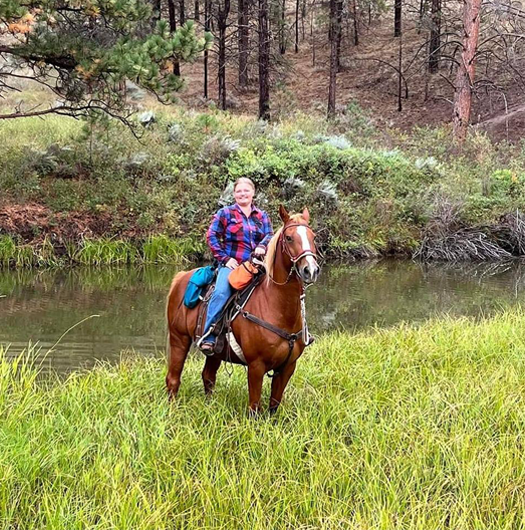
I’m not a trainer. I’m not a clinician. I’m not anyone you’d know from a magazine or clinic poster. I’m just a woman with a horse named Stormy—and a heart that’s been shaped by hoofbeats, heartbreak, and a handful of small miracles.
Stormy has never been easy. He’s clever, stubborn, and often downright difficult. At times, he’s been aggressive—pushing past boundaries, ignoring cues, and testing every ounce of patience I have. But he’s also mine. And underneath all the fire, I always believed there was something softer, something I glimpsed when he was just a colt—curious, playful, and full of light.
Three years after we moved to the Bitterroot Valley, something changed. Stormy began to lose weight, and his already unpredictable behavior grew darker. His eyes lost their spark. His body seemed tight, guarded. I did everything I knew—brushed him daily, adjusted his feed, talked to him like I always had—but nothing helped.
That’s when my friend Cricky mentioned craniosacral therapy. I’d never heard of it. Honestly, it sounded a little strange to me. But I was out of answers—and willing to try anything that might help.
Enter Tanya Drayton—a fiery woman with quiet hands that heal. Her strength doesn’t come from loudness or control—it comes from deep presence, from a wisdom rooted in knowing when to do less, not more. She didn’t rush, didn’t talk much, just listened—with her hands, her breath, her whole being. And Stormy responded like he’d been waiting for someone to finally hear him.
Stormy melted. For the first time in what felt like years, he released. His body softened. His head lowered. His breathing slowed. And it wasn’t just physical—his entire presence changed. Over the following weeks, the angry, guarded gelding I’d been struggling with began to disappear. In his place, the sweet colt I remembered—the one who used to play tag with me—started to return.
Through Stormy, through Tanya, my world shifted. And it changed everything.
I began to see that true strength wasn’t about force. It was about softness, awareness, and relationship. It wasn’t about making a horse “respect you”—it was about learning to listen before asking anything at all. Tanya didn’t “fix” Stormy. She helped him feel safe enough to heal. And in doing so, she taught me to start listening differently, too.
This blog isn’t meant to be a how-to guide or a training manual. It’s just a collection of stories from someone ordinary—someone still learning, still getting it wrong, still showing up. The things I’ve learned didn’t come from textbooks. They came from pain, from patience, and from small moments that changed everything when you pay attention.
If you’re reading this and feel like you’re fumbling through, you’re not alone. Sometimes the best teachers don’t speak at all. Sometimes they have hooves. Or healing hands. Or show up in the spring when everything is beginning again.
Lesson from the Field:
Healing happens when we feel safe enough to soften. Horses know this. We’re just catching up.